
Share Ruth B. Nelson's obituary with others.
Invite friends and family to read the obituary and add memories.
Stay updated
We'll notify you when service details or new memories are added.
You're now following this obituary
We'll email you when there are updates.
Select your format and elements to print

IN LOVING MEMORY OF Ruth B. Nelson
Ruth B.
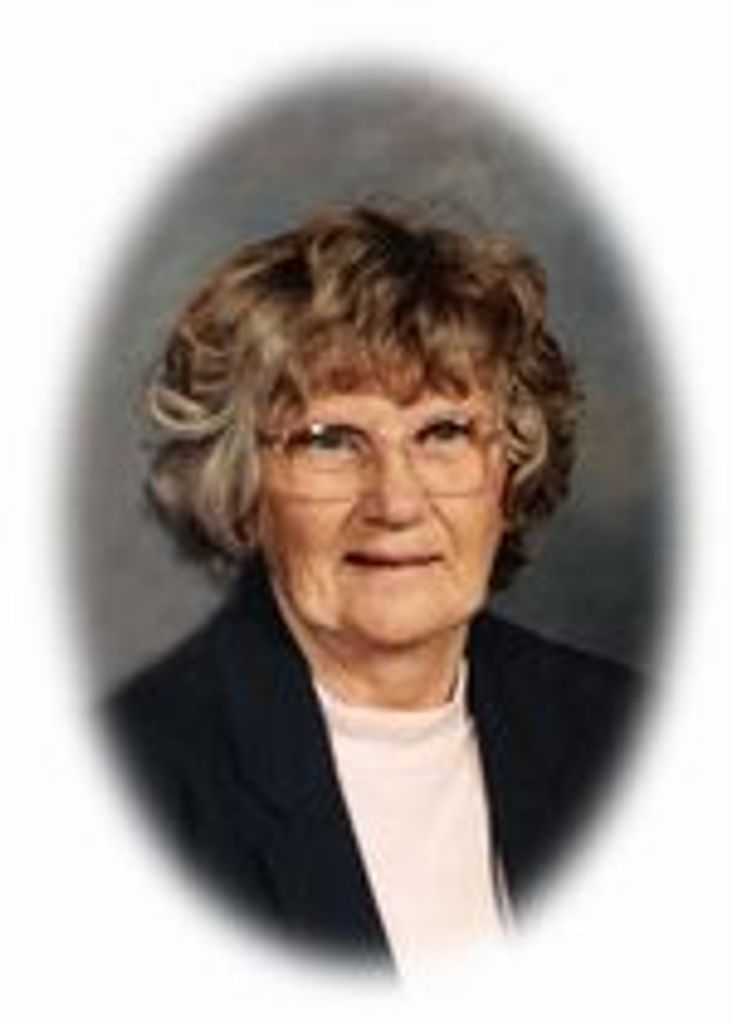
Nelson
Aug 23, 1930 — Oct 15, 2006
Ruth B. Nelson's Obituary
Service of Remembrance for Ruth B. Nelson, 76, of Hettinger, ND will be Wednesday, October 18, 2006 at 2:00 p.m. at the Hettinger Lutheran Church. Rev. Kathleen Dettmann will officiate and burial will follow at the Bucyrus Cemetery, south of Bucyrus, ND. Visitations will be from 1:00 to 8:00 p.m. on Tuesday, Oct. 17th, 9:00 a.m. to noon on Wednesday, Oct. 18th at the Evanson Jensen Funeral Home in Hettinger and one hour prior to the service at the church on Wednesday afternoon.
RUTH BEVERLY NYJORDET was born to Carl and Oline (Egge) Nyjordet in Mayville, ND on August 23, 1930, the youngest of eight children. She attended primary school in Mayville and secondary school at Hillcrest Academy, a school of the Lutheran Brethren Church in Fergus Falls, MN. She attended Mayville State University (then Mayville State Teachers' College) and graduated in 1952 with a Bachelor degree in education with a specialty in science and math. On August 23, 1952 (her birthday) she was married to Ronald Nelson whom she had met in 1949. They met through Lutheran Student Association of which she became president in Mayville and he was regional vice president at NDSU, Fargo. They lived first in a suburb of Lynn, MA (north of Boston) where Ron was an engineer with General Electric. Then they moved to Pittsfield, MA six months later since Ron was assigned there. There Ruth also worked for General Electric in the records department. While in Lynn, Ron was dissatisfied with his Christian witness as an
engineer and one day asked Ruth, « If you could back up and start all over, what would you rather do? » With very little hesitation, she said, « Be a missionary. » That was exactly what Ron had been thinking though he had not told her. So they resigned from General Electric and moved to the Twin Cities so Ron could take the necessary courses for ordination into the ministry. During the five years of study and a year of internship in Oconomowoc, WI, all four of their children were born: Steven, Philip, Nicholas and Karen. After graduation and Ron's ordination, they were called as missionaries of the American Lutheran Church to serve in Cameroon, Africa.
In August, 1959, the family boarded the Queen Elisabeth I, and sailed to France where they spent a year learning French. From their arrival, Ruth had to shop in a strange environment and was obliged to immediately use the French she was learning. They had a private tutor at the apartment in the morning and in the afternoon they both attended the Alliance Française in Paris, leaving the two youngest children in the care of a French woman. The two older boys attended kindergarten. During their time in Europe, Ruth was able to visit the homes of her mother and father in Norway and also the grave of her oldest brother, Kalmer, who had been killed in the Second World War and is buried in Lorraine, France.
In August 1960, they sailed on a small French liner from Bordeaux, France, around the West African coast and arrived in Douala, Cameroun 14 days later. Their first assignment was among a primitive people in North Cameroun. Even though she had no particular medical qualifications, the entire community depended on Ruth for treatment of all sorts of illnesses. It was traditional that if a mother died while her baby was still nursing, the baby would be buried with the mother. When that situation came up, Ruth volunteered to take care of the girl whom they named Mariyama. When she was only a little over a year, an
evangelist and his wife volunteered to take her. It appeared that they could have no children of their own. From the time of their arrival in Cameroun, Steven had to leave them to attend the boarding school two days' journey away. There were some health problems with the children: Karen got a bad case of malaria and her temperature rose so high that she went into convulsions. Nicholas contracted mononucleosis. The family made the six-hour trip to the mission
hospital in Ngaoundéré to get help for him.
Their second assignment was to build and operate a radio recording studio in Ngaoundéré to prepare programs in the Fulani language for broadcast from the powerful station, Radio Voice of the Gospel, in Addis Abeba, Ethiopia. To prepare for those responsibilities, Ron went to a meeting in Ethiopia and left
Ruth to pack the baggage and get the four children ready and aboard the plane in Minneapolis, make the transfers at New York and Paris. She was able to do all those things on her own even though the kids ranged from 11 to 5 in age. As things developed, Ruth became the Go-For for the studio. The merchants in the city got well acquainted with her because of all her contact with them, not only the merchants but the government officials as well. When Philip and June's son, Jeremy was born in Ngaoundéré, it was she who went to the government offices to register his birth. The officials were astounded. It was the first time ever that a woman had come to register a birth – much less a grandmother. Ruth got the responsibility of being a hostess to all the Americans, and many others, moving through Ngaoundéré. She became the 'Mom' for dozens of new missionaries and 'grandma' to their children. Since Ngaoundéré was the entry and exit point for the entire area, that meant she had guests about half the time. In later years, people who had been through Ngaoundéré and experienced her hospitality looked back with fondness on the experience. For some months, Ruth took in a young woman whose life had been threatened. Eventually she was married and the ceremony was in the Nelson home. At another point, she helped a young mother whose baby son vomited each time he nursed. She instructed the mother how to keep her baby upright because evidently the sphincter muscle in his stomach was not properly developed. He grew into a fine young man. Several times it worked out that when it was time for the children to come from or to return to their boarding school five hours trip to the south, Ruth would drive them over the dirt road. She made several trips into the 'bush' for work with women together with the organizer of the women's organization, Verna Syverson. That was especially needed when the vehicular language was Fulani rather than Gbaya. Ruth and Ron said goodbye to their children one by one as they left for the States for college.
In 1989, Ruth and Ron moved 180 miles southwest so that Ron could take up new responsibilities of helping members of the African church with their approach to Muslims and especially the Fulani. During their time there, Ruth developed hyponatremia. She had a bladder infection and the medical people told her to drink a lot of water. It appears that she took the instructions so seriously that she washed too much sodium from her system. Other than that, she had no major health incidents.
They retired in 1995 and came to live in Hettinger. In all, there were 21 different houses that Ruth had called home and she knew how to make them into a real home. She has been known in Hettinger for her cheerfulness and uncomplaining attitude as well as her devotion to her family and to her Lord. In 2001 she developed some initial symptoms of Alzheimer's, but it was definitely diagnosed in 2003. She was admitted to Hillcrest Care Center in Hettinger on September, 2005. She died on October 15, 2006 from
complications due to Alzheimer's.
She was preceded in death by her parents and all her siblings as well as by her oldest son, Steven, who died from a brain tumor in December 2000. Left to thank the Lord for her and her life are her husband, Ron, three children and their families: Philip (June: Caleb, Eirik, Jeremy, Thea) of West Fargo, ND; Nicholas of Bismarck, ND, Karen (Richard: Anna, Mary, Naomi, Hope) of Lewis Center, OH and Steven's widow, Dottie (Debbie Ruth) of Tucson, AZ, and also hundreds of friends in Africa and the U.S.
A Memorial has been established by the family.
RUTH BEVERLY NYJORDET was born to Carl and Oline (Egge) Nyjordet in Mayville, ND on August 23, 1930, the youngest of eight children. She attended primary school in Mayville and secondary school at Hillcrest Academy, a school of the Lutheran Brethren Church in Fergus Falls, MN. She attended Mayville State University (then Mayville State Teachers' College) and graduated in 1952 with a Bachelor degree in education with a specialty in science and math. On August 23, 1952 (her birthday) she was married to Ronald Nelson whom she had met in 1949. They met through Lutheran Student Association of which she became president in Mayville and he was regional vice president at NDSU, Fargo. They lived first in a suburb of Lynn, MA (north of Boston) where Ron was an engineer with General Electric. Then they moved to Pittsfield, MA six months later since Ron was assigned there. There Ruth also worked for General Electric in the records department. While in Lynn, Ron was dissatisfied with his Christian witness as an
engineer and one day asked Ruth, « If you could back up and start all over, what would you rather do? » With very little hesitation, she said, « Be a missionary. » That was exactly what Ron had been thinking though he had not told her. So they resigned from General Electric and moved to the Twin Cities so Ron could take the necessary courses for ordination into the ministry. During the five years of study and a year of internship in Oconomowoc, WI, all four of their children were born: Steven, Philip, Nicholas and Karen. After graduation and Ron's ordination, they were called as missionaries of the American Lutheran Church to serve in Cameroon, Africa.
In August, 1959, the family boarded the Queen Elisabeth I, and sailed to France where they spent a year learning French. From their arrival, Ruth had to shop in a strange environment and was obliged to immediately use the French she was learning. They had a private tutor at the apartment in the morning and in the afternoon they both attended the Alliance Française in Paris, leaving the two youngest children in the care of a French woman. The two older boys attended kindergarten. During their time in Europe, Ruth was able to visit the homes of her mother and father in Norway and also the grave of her oldest brother, Kalmer, who had been killed in the Second World War and is buried in Lorraine, France.
In August 1960, they sailed on a small French liner from Bordeaux, France, around the West African coast and arrived in Douala, Cameroun 14 days later. Their first assignment was among a primitive people in North Cameroun. Even though she had no particular medical qualifications, the entire community depended on Ruth for treatment of all sorts of illnesses. It was traditional that if a mother died while her baby was still nursing, the baby would be buried with the mother. When that situation came up, Ruth volunteered to take care of the girl whom they named Mariyama. When she was only a little over a year, an
evangelist and his wife volunteered to take her. It appeared that they could have no children of their own. From the time of their arrival in Cameroun, Steven had to leave them to attend the boarding school two days' journey away. There were some health problems with the children: Karen got a bad case of malaria and her temperature rose so high that she went into convulsions. Nicholas contracted mononucleosis. The family made the six-hour trip to the mission
hospital in Ngaoundéré to get help for him.
Their second assignment was to build and operate a radio recording studio in Ngaoundéré to prepare programs in the Fulani language for broadcast from the powerful station, Radio Voice of the Gospel, in Addis Abeba, Ethiopia. To prepare for those responsibilities, Ron went to a meeting in Ethiopia and left
Ruth to pack the baggage and get the four children ready and aboard the plane in Minneapolis, make the transfers at New York and Paris. She was able to do all those things on her own even though the kids ranged from 11 to 5 in age. As things developed, Ruth became the Go-For for the studio. The merchants in the city got well acquainted with her because of all her contact with them, not only the merchants but the government officials as well. When Philip and June's son, Jeremy was born in Ngaoundéré, it was she who went to the government offices to register his birth. The officials were astounded. It was the first time ever that a woman had come to register a birth – much less a grandmother. Ruth got the responsibility of being a hostess to all the Americans, and many others, moving through Ngaoundéré. She became the 'Mom' for dozens of new missionaries and 'grandma' to their children. Since Ngaoundéré was the entry and exit point for the entire area, that meant she had guests about half the time. In later years, people who had been through Ngaoundéré and experienced her hospitality looked back with fondness on the experience. For some months, Ruth took in a young woman whose life had been threatened. Eventually she was married and the ceremony was in the Nelson home. At another point, she helped a young mother whose baby son vomited each time he nursed. She instructed the mother how to keep her baby upright because evidently the sphincter muscle in his stomach was not properly developed. He grew into a fine young man. Several times it worked out that when it was time for the children to come from or to return to their boarding school five hours trip to the south, Ruth would drive them over the dirt road. She made several trips into the 'bush' for work with women together with the organizer of the women's organization, Verna Syverson. That was especially needed when the vehicular language was Fulani rather than Gbaya. Ruth and Ron said goodbye to their children one by one as they left for the States for college.
In 1989, Ruth and Ron moved 180 miles southwest so that Ron could take up new responsibilities of helping members of the African church with their approach to Muslims and especially the Fulani. During their time there, Ruth developed hyponatremia. She had a bladder infection and the medical people told her to drink a lot of water. It appears that she took the instructions so seriously that she washed too much sodium from her system. Other than that, she had no major health incidents.
They retired in 1995 and came to live in Hettinger. In all, there were 21 different houses that Ruth had called home and she knew how to make them into a real home. She has been known in Hettinger for her cheerfulness and uncomplaining attitude as well as her devotion to her family and to her Lord. In 2001 she developed some initial symptoms of Alzheimer's, but it was definitely diagnosed in 2003. She was admitted to Hillcrest Care Center in Hettinger on September, 2005. She died on October 15, 2006 from
complications due to Alzheimer's.
She was preceded in death by her parents and all her siblings as well as by her oldest son, Steven, who died from a brain tumor in December 2000. Left to thank the Lord for her and her life are her husband, Ron, three children and their families: Philip (June: Caleb, Eirik, Jeremy, Thea) of West Fargo, ND; Nicholas of Bismarck, ND, Karen (Richard: Anna, Mary, Naomi, Hope) of Lewis Center, OH and Steven's widow, Dottie (Debbie Ruth) of Tucson, AZ, and also hundreds of friends in Africa and the U.S.
A Memorial has been established by the family.
To send flowers with our preferred florist or plant a memorial tree, please visit our flower store.
Ruth B. Nelson's Guestbook
Visits: 0
This site is protected by reCAPTCHA and the
Google Privacy Policy and Terms of Service apply.
Service map data © OpenStreetMap contributors